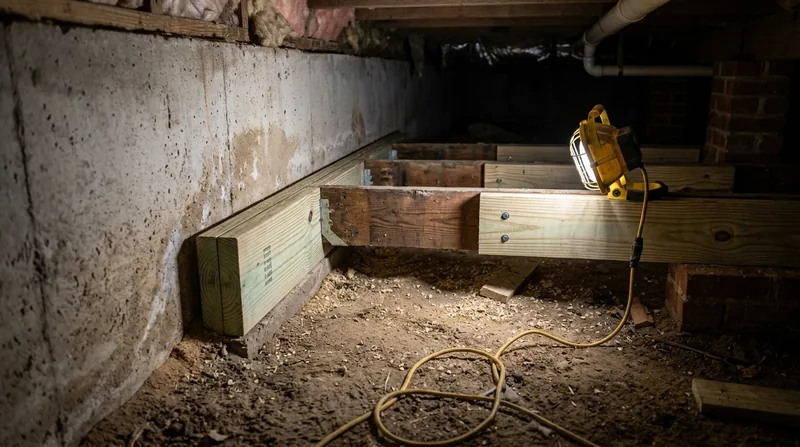




Tidewater's humidity and sandy coastal soil make termites active nearly year-round across Virginia Beach, from the elevated Sandbridge beach cottages to the brick ranchlands of Great Neck and Kempsville. When termites tunnel through studs, sills, subfloor sections or trim, the wood loses its structural strength and the damage spreads silently behind walls and under floors until it becomes visible or costly. Termite damage repair means removing the compromised wood and replacing it with sound material, restoring full integrity before closing walls back up. We work from your pest inspection report, replace only what termites have eaten, and keep repair costs down by sizing members correctly and using the wood species and finish that match your home's original framing. If you've had a termite inspection and need the damaged wood fixed, call us at (757) 392-0128 for a free estimate, or read on to understand how the repair works and what it costs.
Why Termite Damage Repair Matters in Virginia Beach's Humid Climate
Virginia Beach sits on a flat, low-lying coastal plain where humidity stays high from spring through fall and the sandy soil drains poorly after heavy thunderstorms. Termites thrive in this environment and can work through wood year-round, especially in older homes built in the 1950s-70s Navy boom and the mid-century beach cottages just off the Oceanfront. Once termites hollow out a stud, floor joist or sill plate, the wood can no longer carry its share of the load, and neighboring members start to work harder and fail faster. Catching and repairing termite damage early prevents cascading failures that turn a localized repair into a structural overhaul.
- We identify which members are structurally compromised and which can be left in place.
- We remove the termite-eaten wood carefully to avoid disturbing the rest of the framing.
- We install pressure-treated or naturally rot-resistant replacements sized to match the original load-carrying capacity.
- We close the wall or floor back up after confirming the repair is sound and level.
Getting termite damage repaired promptly stops the deterioration and keeps your home's resale value intact. For guidance on Virginia Beach building codes and permit requirements for structural repairs, the City of Virginia Beach Department of Planning publishes building standards that apply to any work involving load-bearing members or alterations to framing.
Key info: Termites in Virginia Beach stay active in the cooler months too, especially in heated crawlspaces and conditioned basements. A single inspection report showing damage is enough to start a repair, but don't wait months between discovery and fixing it. The longer compromised wood sits, the more load transfers to sound members and the higher your risk of uneven settling or sagging floors.
How We Repair Termite Damage: Step-by-Step Process
Our process starts with your pest inspection report and a site visit to identify all the damaged wood and plan the repair sequence. We isolate the work area, remove the compromised members piece by piece, and install sound replacements that restore the original framing's load path. For large jobs involving multiple floor joists or rim joists, we may need to install temporary support while we work, and structural alterations to load-bearing members commonly require a permit from the Virginia Beach building department and sign-off by a licensed structural engineer. See our floor joist and subfloor repair page for detailed information on how we handle sagging floors and sistering techniques.
- We inspect the damage report and assess the scope of wood removal needed.
- We open walls or floors only as much as necessary to reach and replace the termite-eaten members.
- We install pressure-treated lumber or rot-resistant species (Douglas fir, redwood) in place of the damaged wood.
- We verify the repair is level, plumb and properly fastened before closing walls back up.
- We patch drywall, reattach trim or refinish exposed wood to match the surrounding area.
In a typical Virginia Beach ranch home with termite damage in the rim joist and band board, we can complete the repair in 2 to 4 days depending on wall access and the size of the affected area. Elevated beach cottages in Sandbridge often require temporary support posts and more careful sequencing because the framing is exposed and the load path is less forgiving.
Example: A Kempsville homeowner discovered termites in the sill plate and first-floor rim joist after a routine inspection. We removed the damaged 2x8 sill, installed a pressure-treated replacement, and repaired the rim joist with sister boards and new fasteners. The work took 3 days, required no permit because it was repair-in-kind, and cost $2,800 including materials and labor.
Repair Methods: Choosing the Right Approach for Your Home
| Approach | Description | Best for |
|---|---|---|
| Stud or trim replacement | Remove the termite-eaten stud or trim board and install a new one in its place, matching species and dimensions. | Non-load-bearing walls, exterior trim, window casings, door jambs, and isolated damage in one or two members. |
| Sistering floor joists | Install a new joist alongside the damaged one, bolting them together so they share the load and act as one unit. | Floor joists with partial damage that still have at least 50% of their depth intact, where full replacement is not yet necessary. |
| Full joist or beam replacement | Remove the entire damaged member and install a new one, using temporary support posts to carry the load during the swap. | Joists or beams with extensive hollow-out, sagging, or where sistering cannot restore adequate load capacity. |
| Sill plate and rim joist repair | Replace the pressure-treated sill plate and repair or replace rim joists using pressure-treated lumber and new fasteners. | Termite damage at the foundation line where moisture and soil contact are highest, common in Virginia Beach crawlspaces. |
| Subfloor patching | Remove the damaged subfloor section and install new plywood or boards, fastening to the joists below. | Localized soft spots or hollow areas in the subfloor where the finish floor is still sound and can remain in place. |
The right method depends on how much wood has been damaged, whether the member is load-bearing, and how much access we have to work safely. We always propose repair over replacement when the wood's remaining strength is adequate.
Termite Damage Repair Cost in Virginia Beach: What to Expect
Termite damage repair in Virginia Beach typically starts at $1,200 for a small isolated repair, such as a single damaged stud or a short section of rim joist, and grows with the number of members affected, the depth of the damage, and whether the repair requires temporary support or a building permit. A mid-range repair involving multiple floor joists or a full sill plate replacement runs $2,500 to $4,500, while large-scale jobs affecting multiple rooms or requiring structural engineer sign-off and permits can exceed $6,000. The best way to know what your repair will cost is to get a free on-site estimate from us. We'll photograph the damage, measure the affected area, and explain which members need to come out and what species and fastening we'll use to put them back.
Several factors move the price up or down. If the damage is in a crawlspace or basement with good access, we work faster and charge less. If it's behind finished walls or in a tight space, we spend more time opening and closing, and the price reflects that. Pressure-treated lumber costs more than standard framing but lasts longer in damp Virginia Beach basements and crawlspaces. A repair that requires a temporary support wall or a building permit will also carry higher labor and material costs.
Don't compare estimates based on price alone. A low bid might mean the contractor is cutting corners on fastening or material quality, or underestimating the scope. We recommend getting 2 to 3 estimates so you can see how different carpenters approach the same job. For a detailed pricing breakdown and examples of common repairs, visit our full pricing page.
Cost factors: Pressure-treated lumber, temporary support posts, building permits, and structural engineering add to the total. Travel to Norfolk, Chesapeake, Portsmouth and other nearby cities is included in our estimate, with no separate mileage fee. Call (757) 392-0128 for a free estimate within 24 hours.
Hiring a Carpenter for Termite Damage Repair Near Me: What Virginia Beach Homeowners Should Know
Finding the right carpenter for termite damage repair means looking for someone who understands structural framing, can read a pest inspection report, and won't oversell you on replacement when repair is the honest answer. Ask potential contractors how they would handle your specific damage, whether they've done similar work in your neighborhood or home type, and what their timeline looks like. Request references from recent jobs and check them. If the repair involves a load-bearing wall or multiple structural members, confirm that the contractor will obtain the necessary building permit and work with a licensed structural engineer if required by the Virginia Beach building department.
- Verify that the contractor is fully insured and can provide a certificate of insurance before work begins.
- Get a written estimate that lists the materials, labor, timeline, and any assumptions about access or scope.
- Ask whether the repair includes temporary support, opening and closing walls, and finishing or patching after the work is done.
- Confirm that the contractor will pull any required permits and coordinate with the building inspector.
- Check whether your HOA or deed restrictions require approval for structural repairs, especially in historic neighborhoods like Thoroughgood.
We're a local shop with carpenters who have worked on Virginia Beach homes for over 8 years, from Sandbridge beach cottages to Great Neck ranches to Pungo farmhouses. We explain what we find, show you photos, and tell you straight whether the wood can be repaired or needs to come out. If you're ready to get started, contact us for a free estimate or call (757) 392-0128.
Termite Damage Repair in Virginia Beach: Pricing Guide
| Service | Price | Details |
|---|---|---|
| Single stud or trim replacement | Starting at $1,200 | One non-load-bearing member, including material, labor, wall opening, and finish patching |
| Rim joist or sill plate repair | Starting at $2,000 | Pressure-treated replacement at foundation line, common in Virginia Beach crawlspaces, access dependent |
| Multiple floor joists or sistering | Starting at $2,800 | Two or more joists, temporary support, new fasteners, and subfloor patching if needed |
| Large-scale or permit-required work | On estimate | Structural engineer sign-off, building permit, multiple rooms, or load-bearing wall alterations require site visit |
| Travel | Included | Virginia Beach and surrounding cities, no separate mileage fee or call-out charge |
| Free estimate | No obligation | Response within 24 hours, photographs, written scope, and honest repair or replace recommendation |
Indicative pricing, the exact cost depends on square footage, finish, and site access. Free personalized estimate within 24h at (757) 392-0128.


