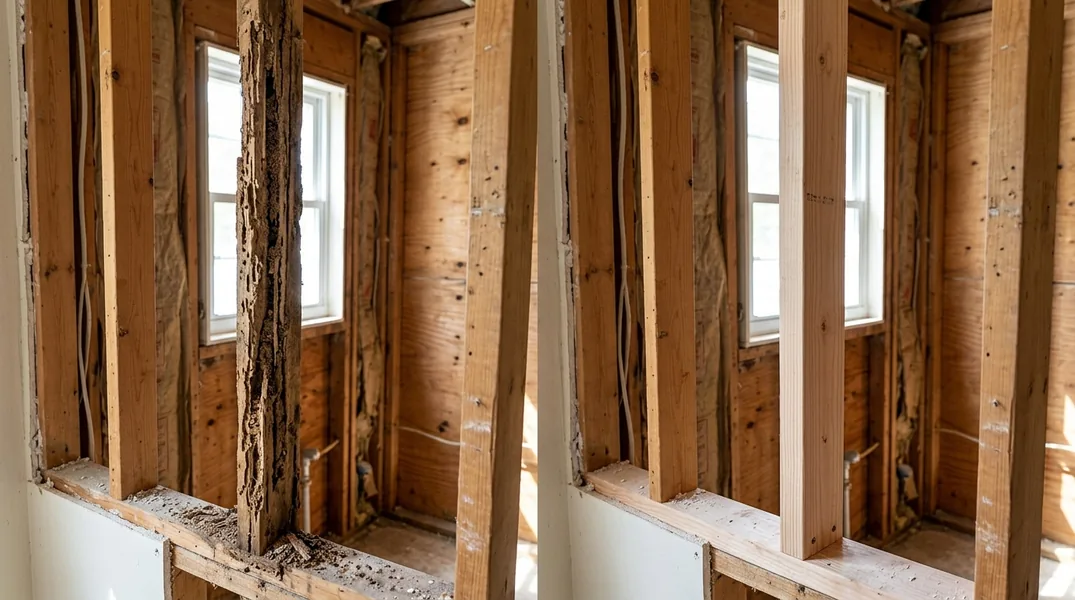
Dry Rot vs Termite Damage: Why the Difference Matters
If you've noticed soft, crumbling wood in your Virginia Beach home, your first instinct might be to panic. But before you assume the worst, it's crucial to understand what you're actually dealing with. Dry rot and termite damage are two entirely different problems that require completely different solutions. Misidentifying the culprit could lead you down the wrong path, wasting time and money on treatments that won't solve your real problem.
The coastal climate of Virginia Beach creates the perfect storm for both wood-destroying fungi and hungry termite colonies. High humidity, temperature fluctuations, and moisture from the Atlantic Ocean make our homes vulnerable to these twin threats. Understanding the differences between dry rot and termite damage is the first step toward protecting your property and making an informed decision about repairs.
What Does Wood Rot Look Like: Identifying Dry Rot
Dry rot, despite its misleading name, is actually caused by moisture and fungal growth. When you're trying to determine what does wood rot look like, look for wood that appears darkened, crumbly, and fragile. The affected wood often develops deep cracks that run across the grain in a distinctive cube-like pattern. This pattern is one of the most telltale signs of dry rot and can help you distinguish it from other forms of wood damage.
The texture of dry rot-damaged wood is particularly distinctive. When you press your finger or a screwdriver against affected areas, the wood crumbles easily like chalk or dried-out soil. You might also notice a musty, earthy smell around the damaged area, which indicates active fungal growth. The damage often starts in hidden areas like crawl spaces, basement joists, or under sinks where moisture tends to accumulate. If you suspect you have dry rot, Wood Rot & Dry Rot Repair should be your priority before the damage spreads further through your home's structural elements.
Signs of Termite Damage in Wood: What to Look For
Termite damage presents a very different picture than dry rot. While dry rot creates visible crumbling and deep cracks, termites work from the inside out, leaving wood that appears relatively intact on the surface but is hollow underneath. This is one of the most dangerous aspects of termite damage: your wood can look fine while being completely compromised internally. Signs of termite damage in wood include small, perfectly round exit holes (about the size of a pencil tip), mud tubes running along foundation walls or wooden beams, and wood that sounds hollow when tapped.
Another key indicator of termite activity is the presence of discarded wings near windowsills or light sources, since termites swarm during specific seasons. You might also notice small piles of what looks like sawdust (actually termite droppings called frass) beneath infested wood. Unlike the musty smell of dry rot, termite-damaged wood typically has no distinctive odor. The damage pattern is also different: termites eat along the grain, creating smooth tunnels rather than the cube-like cracking pattern you see with dry rot. If you've found signs of termite activity, professional Termite Damage Repair is essential to prevent catastrophic structural failure.
Wood Rot vs Termite Damage: Key Differences in Damage Patterns
Understanding the structural damage patterns can help you identify which problem you're facing. Dry rot damage is generally more visible and concentrated in specific areas where moisture is present. The fungus spreads through the wood in a somewhat predictable way, following moisture pathways. You'll often see the damage clustered around plumbing leaks, roof penetrations, or areas with poor drainage. The wood becomes progressively softer and more crumbly as the fungal growth continues.
Termite damage, by contrast, spreads more systematically and can affect much larger areas of your home without obvious external signs. Termites eat through wood in parallel tunnels, following the grain, and they work continuously throughout the year. A termite colony can cause extensive damage to structural elements like Floor Joist & Subfloor Repair areas without you realizing the extent of the problem until it's severe. The damage tends to be more uniform in appearance, whereas dry rot creates that distinctive cracked, cube-like pattern. Additionally, termites require ongoing treatment to eliminate the colony, while dry rot requires addressing the moisture source and removing affected wood.
When to Call a Professional: Wood Rot & Dry Rot Repair Near Me
If you've identified potential dry rot or termite damage in your home, professional assessment is crucial. Both conditions can compromise your home's structural integrity, and attempting DIY repairs without proper diagnosis can make the situation worse. A trained carpenter can determine the extent of the damage, identify the underlying cause, and recommend the appropriate course of action. Whether you need Wood Rot & Dry Rot Repair or termite damage restoration, the sooner you address the problem, the less expensive the repair will be.
Virginia Beach Carpentry specializes in identifying and repairing both dry rot and termite damage. Our team understands the unique challenges that moisture and pests present in the coastal Virginia Beach environment. We can perform a thorough inspection, explain your options, and provide a free estimate for the work needed. Don't wait until the damage becomes critical. Call us at (757) 392-0128 to schedule an inspection today.
Prevention and Next Steps: Protecting Your Virginia Beach Home
The best approach to dealing with dry rot and termite damage is prevention. For dry rot, focus on moisture control: ensure gutters are clean and functioning properly, fix plumbing leaks promptly, maintain proper grading around your foundation, and ensure adequate ventilation in crawl spaces and attics. Regular inspections of vulnerable areas can catch problems early before they become expensive repairs.
For termite prevention, eliminate wood-to-soil contact, remove dead trees and stumps from your property, and keep mulch at least 12 inches away from your foundation. Consider having your home inspected annually by a professional, especially if you live in an older home or have had previous pest issues. If you've already discovered damage, don't delay. Whether you need structural repairs, Beam Replacement & Load-Bearing Wall Removal, or comprehensive restoration, Virginia Beach Carpentry is ready to help. Contact us today for a professional assessment and get your home back to safe, sound condition.
Looking for a professional carpentry contractor in Virginia Beach? Virginia Beach Carpentry responds fast for all your carpentry needs.
Get a Free QuoteOur services: Wood Rot & Dry Rot Repair · Termite Damage Repair · Floor Joist & Subfloor Repair