Why Is My Floor Sagging? Common Causes in Older Virginia Beach Homes
If you own an older home in Virginia Beach, a sagging floor is more than just an aesthetic concern. It's a red flag that something structural is wrong beneath your feet. The causes vary, but understanding them is the first step toward fixing the problem before it worsens.
The most common culprit is Wood Rot & Dry Rot Repair in the floor joists or support beams. Virginia Beach's humid climate and proximity to water create ideal conditions for wood decay. When moisture seeps into the basement or crawl space, it attacks the wooden support structure, weakening it over time. What starts as soft spots in the wood eventually leads to significant load-bearing failure, causing floors to dip and settle unevenly.
Another frequent cause is Termite Damage Repair. Subterranean termites are active throughout the region and can silently hollow out floor joists from the inside. Homeowners often don't realize they have a termite problem until the floor starts to feel bouncy or sags noticeably. By that point, significant structural damage has already occurred.
Inadequate support, settling foundations, and undersized joists also contribute to sagging floors. Older homes were sometimes built with materials or methods that don't meet today's building codes. As the house ages and settles, the support system may not be robust enough to handle the weight distribution, especially if renovations have removed load-bearing walls or added heavy fixtures like tile or stone.
How to Identify a Sagging Floor Before It Becomes Dangerous
Detecting a sagging floor early can save you thousands in repair costs and prevent safety hazards. The signs are often subtle at first, which is why many homeowners miss them until the problem is severe. Start by walking through your home and paying attention to how the floors feel underfoot. Do they feel slightly bouncy or soft in certain areas? Does furniture slide toward the center of a room without being pushed?
Visual cues are equally important. Look for gaps between baseboards and floors, or cracks in drywall and plaster that weren't there before. These gaps and cracks often appear because the house is settling unevenly. Check door and window frames to see if they're still square. Doors that stick or won't close properly can indicate that the frame has shifted due to floor movement. In the basement or crawl space, look for visible water damage, mold, or soft spots in the wooden support structure. Use a moisture meter if you have one. If wood joists read above 20 percent moisture content, you likely have a serious problem.
If you notice any of these signs, don't wait. Call Virginia Beach Carpentry at (757) 392-0128 to schedule a professional inspection. Early intervention is always cheaper and safer than dealing with catastrophic structural failure.
Floor Joist & Subfloor Repair: What Your Options Are
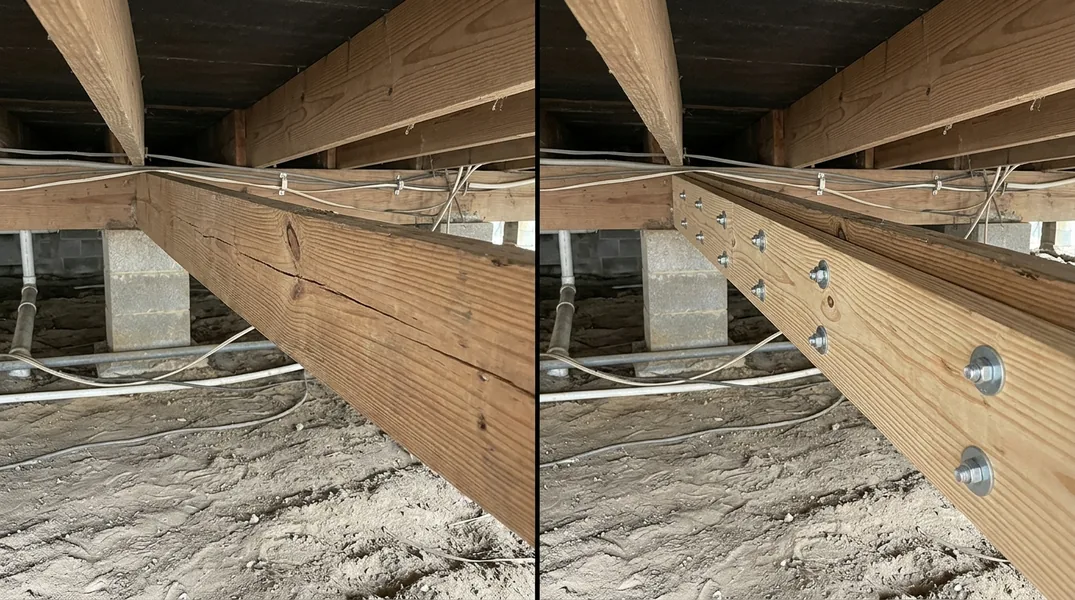
Floor Joist & Subfloor Repair can range from simple reinforcement to complete replacement, depending on the extent of the damage. The most common repair method for moderately damaged joists is sistering. This technique involves fastening a new piece of lumber alongside the damaged joist to share the load. The new joist, called a sister joist, is typically the same size and grade as the original and is bolted or nailed securely to it. Sistering is cost-effective and works well when the damage is localized and the underlying structural integrity hasn't been completely compromised.
For more severe damage, partial or complete joist replacement may be necessary. This involves carefully removing the damaged section or entire joist and installing a new one. If the rot or termite damage extends to multiple joists or affects the main support beams, your contractor may recommend Beam Replacement & Load-Bearing Wall Removal work. This is more involved and typically requires temporary support structures during the repair process to ensure the floor doesn't collapse.
The subfloor itself may also need attention. If the subfloor has rotted or suffered termite damage, sections may need to be replaced. A professional inspection will determine whether you can get away with spot repairs or if larger sections require replacement. Whatever the repair method, addressing the underlying moisture problem is critical. Your contractor should identify and seal the source of water intrusion, improve drainage around the foundation, or add ventilation to the crawl space to prevent future problems.
Sistering Floor Joists: The Most Popular Repair Solution
Sistering floor joists has become the go-to repair method for many homeowners because it's effective, relatively non-invasive, and more affordable than full replacement. The process involves installing a new joist alongside the damaged one, creating a composite beam that shares the structural load. This method works especially well in Virginia Beach homes where the damage is caught early and hasn't spread throughout the entire joist system.
The sister joist must be the same dimensions as the original and made from pressure-treated lumber rated for the application. It's installed tightly against the damaged joist and secured with bolts, nails, or lag screws spaced every 12 to 16 inches along the length. The connection points are critical. Poor fastening can compromise the repair, so professional installation is essential. The new joist carries half the load, allowing the damaged one to rest while still contributing to overall support.
One advantage of sistering is that it doesn't require temporary support structures in most cases, which means less disruption to your daily life. The repair can often be completed within a few days, depending on the number of joists that need attention. However, access to the joists is necessary. If they're buried under a finished basement or difficult to reach, the repair becomes more complicated and costly. Your contractor will evaluate the accessibility during the initial inspection and let you know what to expect.
Sagging Floor Repair Cost in Virginia Beach: What to Budget
The cost of sagging floor repair varies widely depending on the severity of the damage, the number of joists affected, and the repair method chosen. For a simple sistering repair on one or two joists, you might expect to pay between 1,500 and 3,500 dollars. This includes labor, materials, and a basic inspection. If multiple joists need sistering or if the damage is more extensive, costs can climb to 5,000 to 10,000 dollars or more.
Full joist replacement is significantly more expensive. Removing and installing new joists typically costs between 3,000 and 8,000 dollars per joist, depending on length and accessibility. If your home requires pricing information for major structural work, expect estimates in the 10,000 to 30,000 dollar range or higher. The good news is that many homeowners can get free estimate consultations to understand their specific situation before committing to repairs.
Several factors influence final cost. The depth of your crawl space or basement affects labor time. Extensive water damage or mold remediation adds to the bill. If the repair requires temporary support structures or multiple trips to inspect progress, costs increase. Additionally, addressing the underlying moisture problem, such as installing a sump pump or improving drainage, is an additional expense but absolutely necessary to prevent future damage. At Virginia Beach Carpentry, we provide transparent pricing and detailed estimates so you know exactly what you're paying for.
When to Call a Professional: Floor Joist Repair Near Me
While some homeowners are tempted to tackle floor repairs themselves, this is genuinely a job for professionals. Floor joists are load-bearing elements. A mistake in repair or assessment can lead to catastrophic failure, injury, or even death. Structural work requires proper licensing, insurance, and expertise that DIY efforts simply cannot replicate. Professional contractors have the tools, knowledge, and experience to diagnose the problem accurately and execute repairs safely.
Virginia Beach Carpentry specializes in floor joist repair and has been serving the area for years. Our team understands the unique challenges of older Virginia Beach homes, from moisture problems caused by the coastal climate to the prevalence of termite damage. We conduct thorough inspections using modern diagnostic tools, provide honest assessments, and recommend the most cost-effective repair strategy for your situation. We're fully insured, and committed to quality workmanship.
If you're noticing signs of a sagging floor, don't delay. Contact Virginia Beach Carpentry today at (757) 392-0128 to schedule your inspection. The longer you wait, the worse the damage becomes and the more expensive the repair will be. A quick call now could save you tens of thousands of dollars and ensure your home remains safe for your family.
Looking for a professional carpentry contractor in Virginia Beach? Virginia Beach Carpentry responds fast for all your carpentry needs.
Get a Free QuoteOur services: Wood Rot & Dry Rot Repair · Termite Damage Repair · Floor Joist & Subfloor Repair